La victoria de SorollaThe Victory of Sorolla
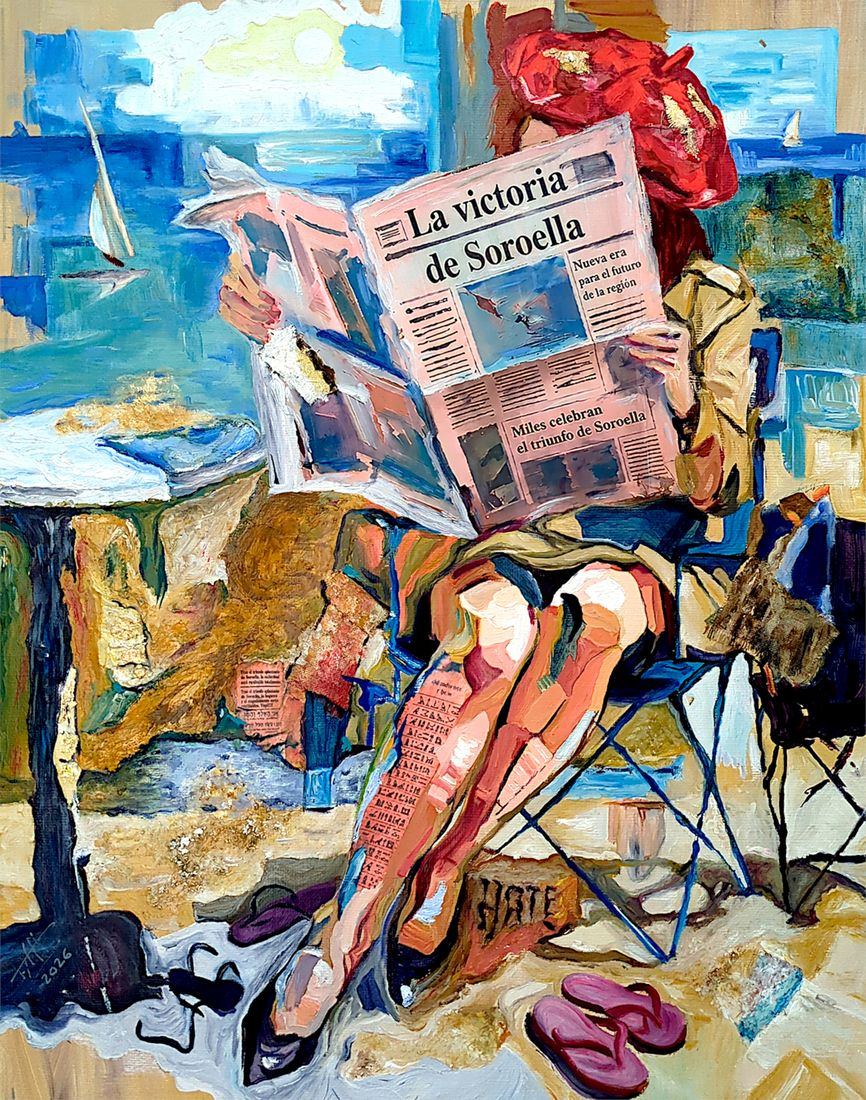
Una mujer lee en la playa un periódico que anuncia la victoria de un pintor.A woman on the beach reads a newspaper announcing a painter’s victory.
Cómo se hizoHow it was made
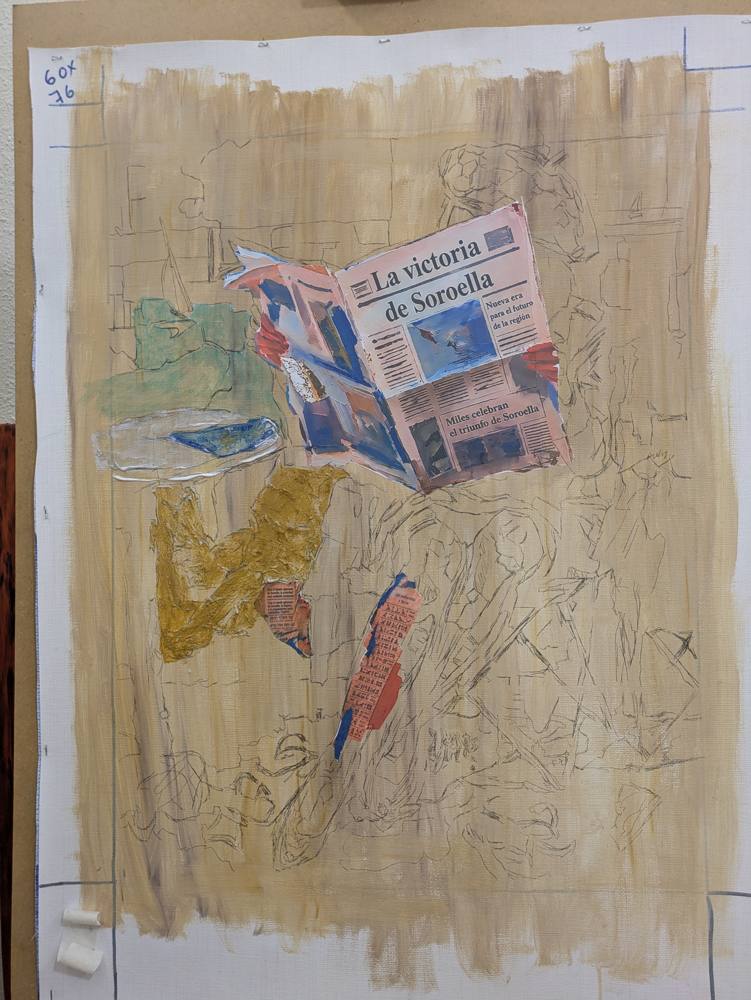
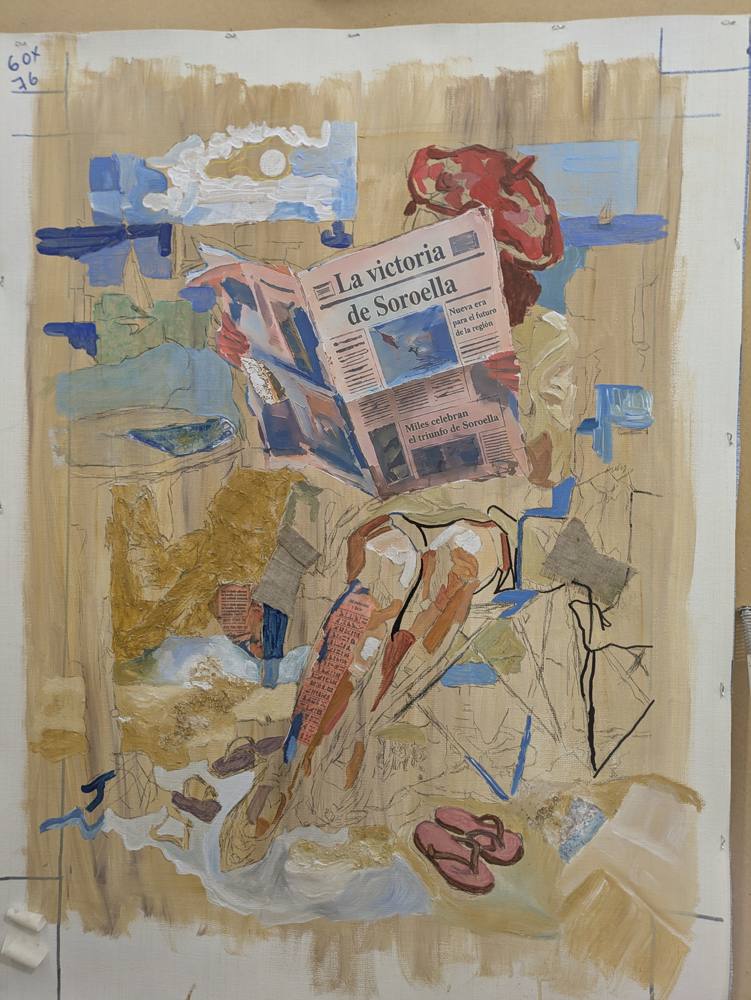
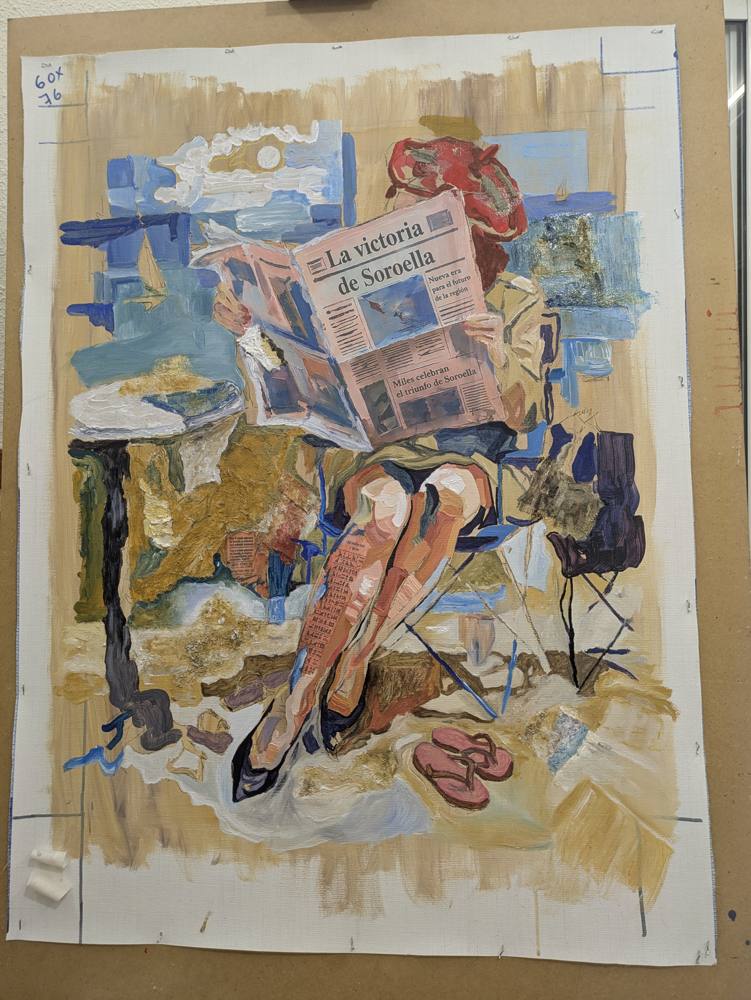
El cuadro se pintó entre el 10 y el 20 de junio de 2026. Las fotos del taller muestran cómo el periódico es lo primero que aparece, y cómo a su alrededor se van construyendo la playa, el mar y la figura, a base de planos de color y textura.
The painting was made between 10 and 20 June 2026. The studio photographs show the newspaper appearing first, and the beach, the sea and the figure being built around it from planes of colour and texture.
-
El periódicoThe newspaper
Sobre una base ocre y el dibujo, el periódico rosa ya ocupa su lugar con su titular. Apenas hay color en el resto.
Over an ochre ground and the drawing, the pink newspaper already takes its place with its headline. There is hardly any colour elsewhere.
10-06-2026 -
El mar y las piernasThe sea and the legs
Aparecen los azules del mar, el gorro rojo y las piernas cruzadas. Las chanclas, abajo, ya tienen color.
The blues of the sea, the red hat and the crossed legs appear. The flip-flops, below, already have colour.
12-06-2026 -
La sillaThe chair
Se dibuja la silla plegable en azul y se trabaja la arena con texturas doradas.
The folding chair is drawn in blue and the sand is worked with golden textures.
15-06-2026 -
La arenaThe sand
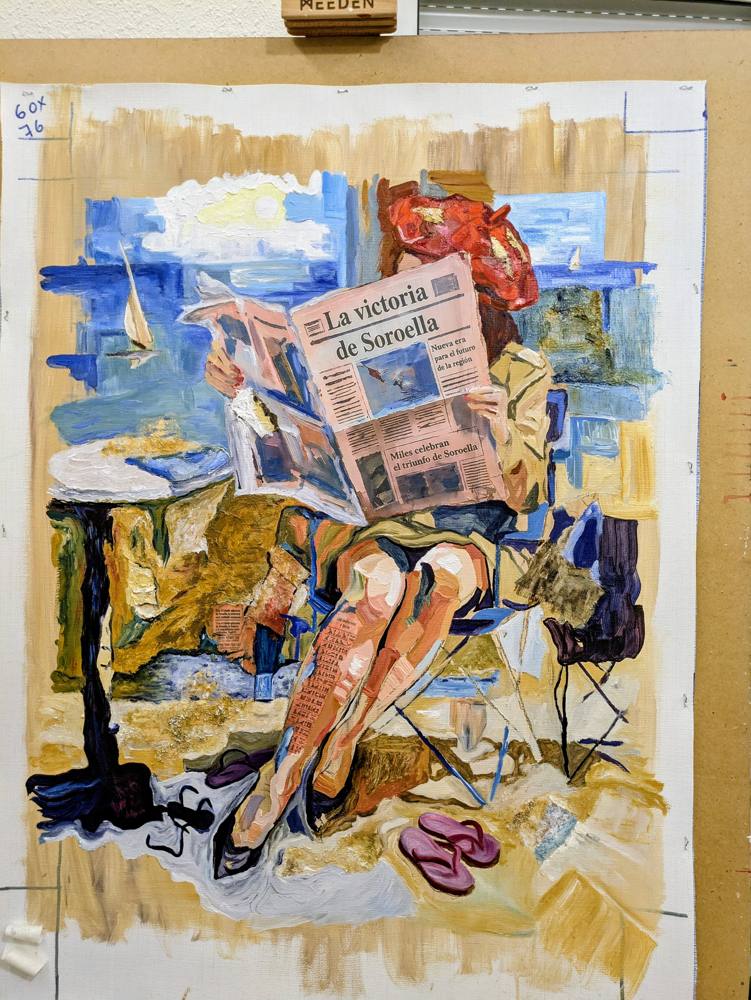
La parte baja se llena de objetos: un bolso, unos zapatos, una caja con una palabra escrita.
The lower part fills with objects: a bag, some shoes, a box with a word written on it.
17-06-2026 -
EscrituraWriting
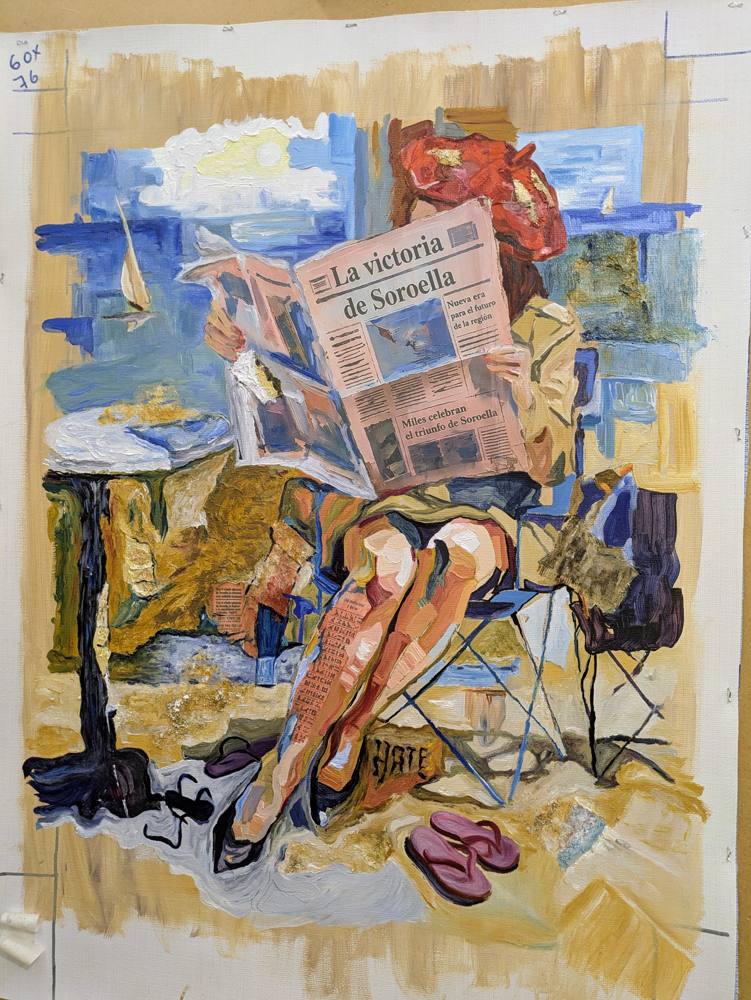
Se pintan textos pequeños sobre la pierna y la arena, como fragmentos de otros periódicos.
Small texts are painted on the leg and the sand, like fragments of other newspapers.
18-06-2026 -
TerminadoFinished
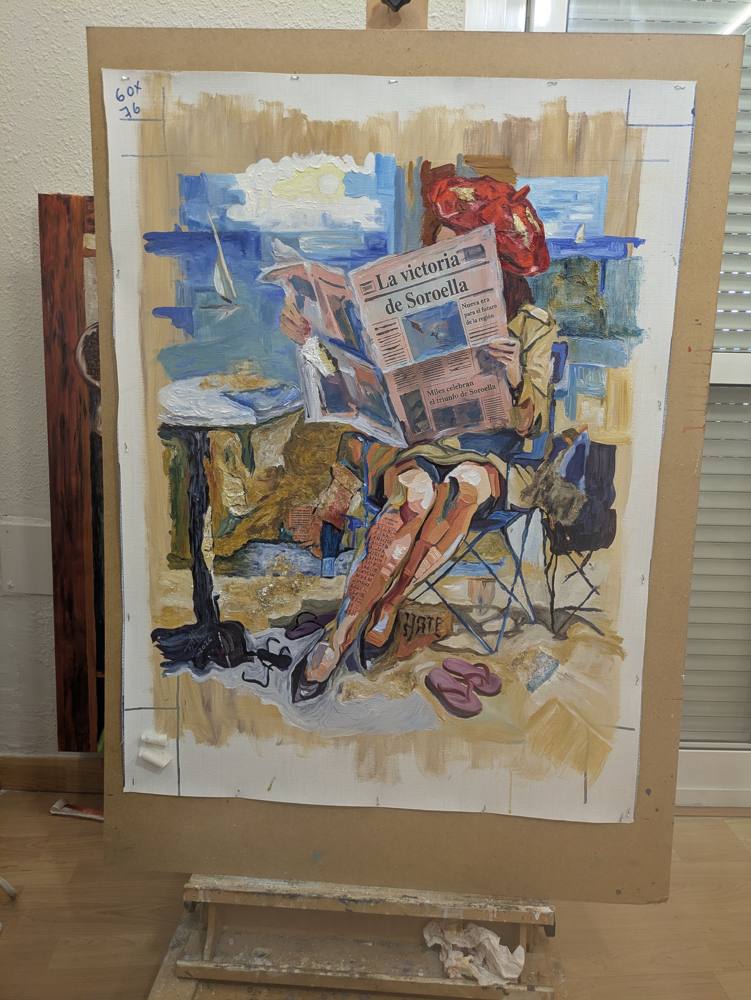
Se ajustan los blancos del cielo y se firma. La lectora queda en el centro de una playa hecha de fragmentos.
The whites of the sky are adjusted and the painting is signed. The reader is left at the centre of a beach made of fragments.
20-06-2026
La luz como noticiaLight as news
Joaquín Sorolla fue el gran pintor de la luz del Mediterráneo: playas, velas, niños en el agua, mujeres de blanco bajo el sol. El cuadro le rinde homenaje con ironía.
Una mujer con un gorro rojo lee en su silla de playa un periódico inventado. En portada: “La victoria de Soroella”, y debajo “Miles celebran el triunfo de Soroella”. Ese nombre no es una errata: es una ironía lingüística sobre la interpretación del lenguaje. Basta cambiar una letra para que un nombre conocido se vuelva otro, y para que cada lector entienda algo distinto.
Por eso el cuadro está lleno de palabras: el titular, los recortes en la arena, las líneas de texto sobre la pierna y, en una caja, HATE. Leemos, pero lo que entendemos depende de cómo interpretamos. El cuadro fue finalista del XXV Premio Fabrizio De André 2026, en Roma.
Joaquín Sorolla was the great painter of Mediterranean light: beaches, sails, children in the water, women in white under the sun. The painting pays tribute to him with irony.
A woman in a red hat reads an invented newspaper in her beach chair. On the front page: “La victoria de Soroella”, and below it “Thousands celebrate Soroella’s triumph”. That name is not a typo: it is a piece of linguistic irony about how language is interpreted. Changing a single letter is enough to turn a famous name into another, and for each reader to understand something different.
That is why the painting is full of words: the headline, the cuttings in the sand, the lines of text on the leg and, on a box, HATE. We read, but what we understand depends on how we interpret. The painting was a finalist for the 25th Fabrizio De André Prize 2026, in Rome.
- HomenajeTribute
La luz, el mar y la figura en la playa son temas de Sorolla, aquí vistos con mirada de hoy.
Light, sea and the figure on the beach are Sorolla’s themes, seen here with today’s eyes.
- Ironía lingüísticaLinguistic irony
“Soroella”: una letra cambiada basta para que el sentido se mueva. Leer es siempre interpretar.
“Soroella”: one changed letter is enough to shift the meaning. Reading is always interpreting.
- FragmentosFragments
Textos, objetos y planos de color construyen la escena como un collage.
Texts, objects and planes of colour build the scene like a collage.
Cómo está pintadoHow it is painted
ComposiciónComposition
El periódico abierto ocupa el centro alto y oculta el rostro. Las piernas cruzadas forman una diagonal hacia las chanclas, abajo a la derecha.
The open newspaper fills the upper centre and hides the face. The crossed legs form a diagonal down to the flip-flops at lower right.
ColorColour
Azules del mar y del cielo, ocres y dorados de la arena, el rosa del periódico y el rojo intenso del gorro.
Blues of sea and sky, ochres and golds of the sand, the pink of the newspaper and the intense red of the hat.
MateriaMatter
Técnica mixta con mucha textura en la arena y planos lisos y recortados en la figura. Los textos están pintados a mano.
Mixed media with heavy texture in the sand and smooth, cut-out planes in the figure. The texts are painted by hand.
Recorrido por los detallesA tour of the details
Pulsa un número para ir al detalle. Pulsa cualquier imagen para verla grande.Tap a number to jump to the detail. Tap any image to see it large.
El titular y el gorroThe headline and the hat
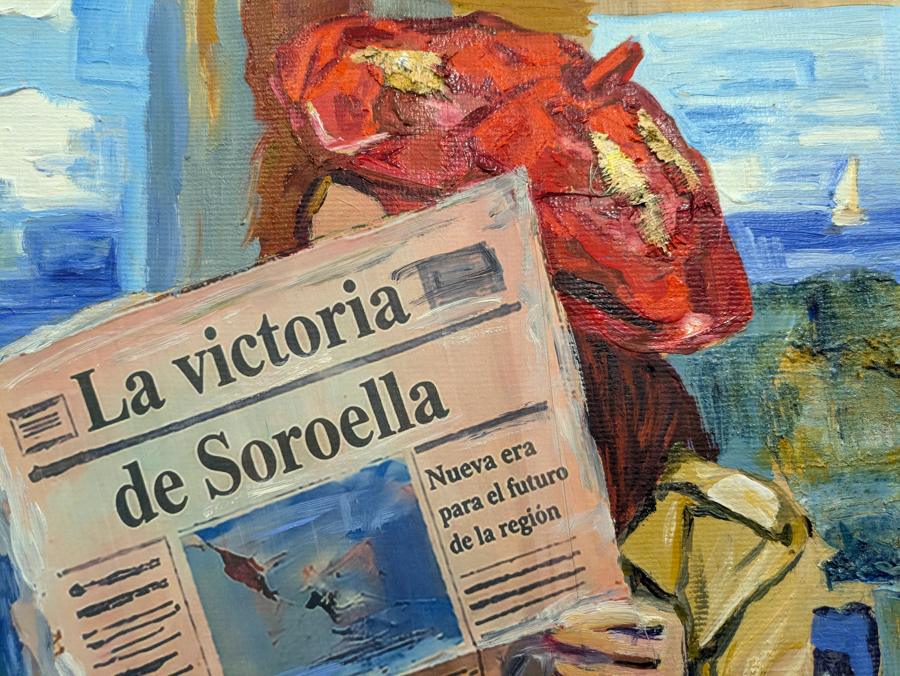
“La victoria de Soroella” en grandes letras, y el gorro rojo asomando por encima.
“La victoria de Soroella” in large letters, with the red hat peeping over the top.
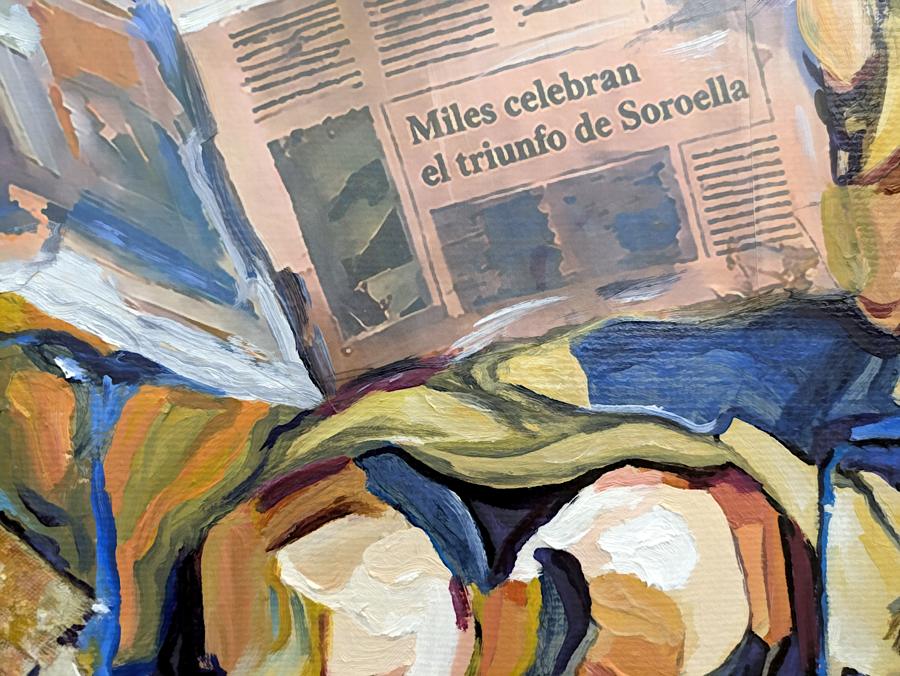
Miles celebranThousands celebrate
La parte baja del periódico: otra noticia sobre el mismo triunfo, y las rodillas debajo.
The lower part of the newspaper: another story about the same triumph, with the knees below.
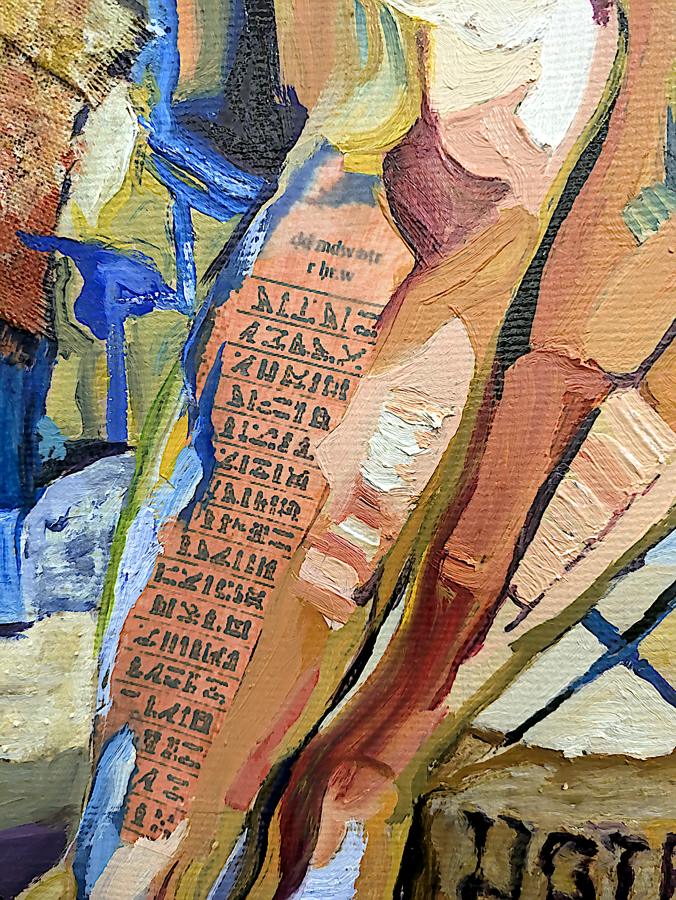
La pierna escritaThe written leg
Sobre la pierna se pintan líneas de texto, como si la figura también fuera papel.
Lines of text are painted on the leg, as if the figure too were paper.
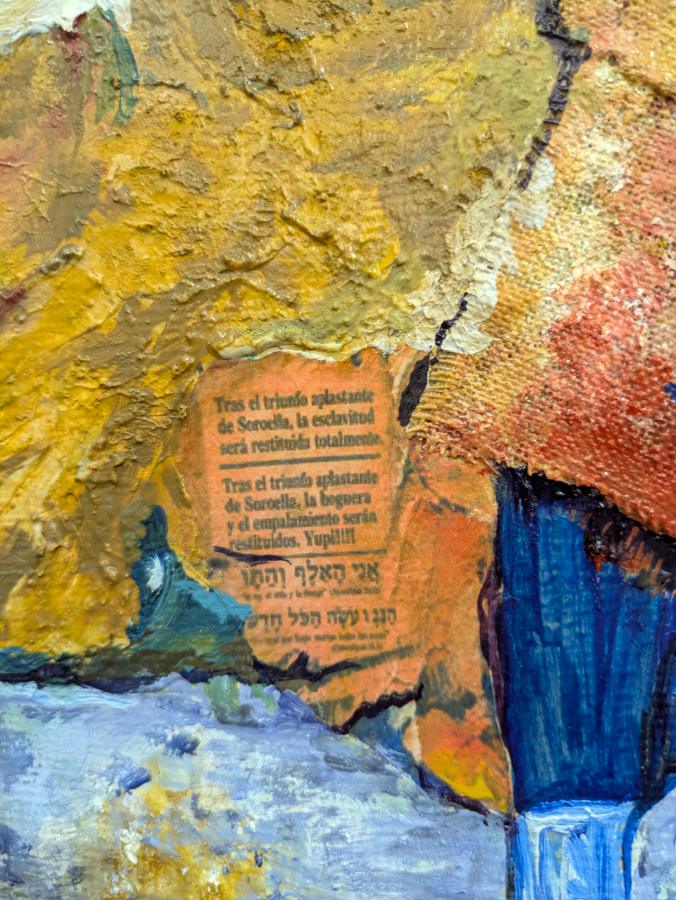
Textos en la arenaTexts in the sand
Un recorte naranja con letras pequeñas entre empastes dorados.
An orange cutting with small letters among golden impasto.
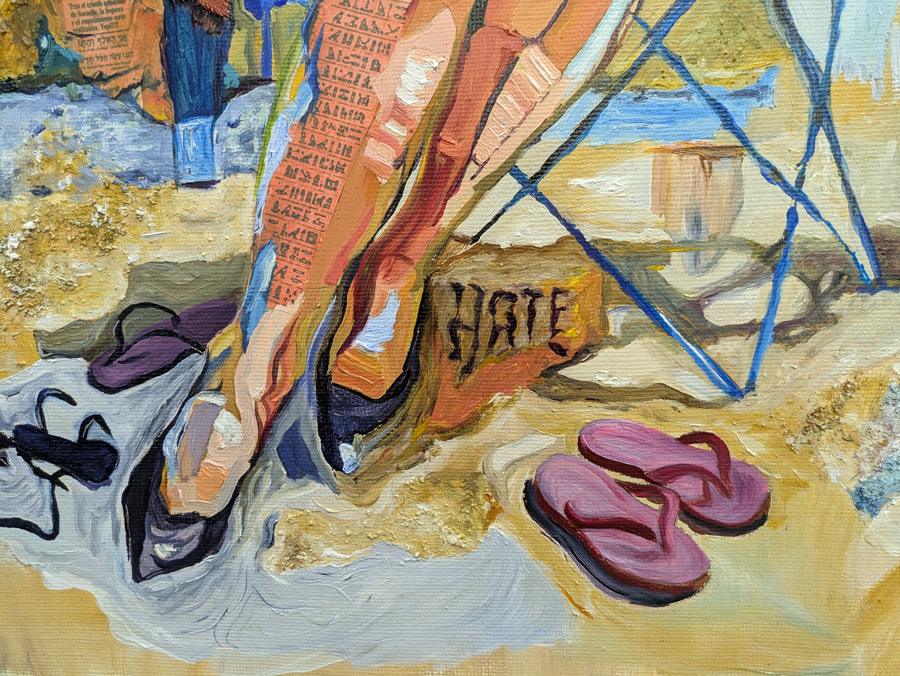
HATEHATE
Una caja en la arena con la palabra escrita, junto a las chanclas y el bolso. Otra palabra que cada uno leerá a su manera.
A box in the sand with the word written on it, beside the flip-flops and the bag. Another word that each viewer will read in their own way.
El proceso, en vídeoThe process, on video
Un recorrido breve por las fotos del taller, de la primera capa al cuadro terminado.
A short tour through the studio photographs, from the first layer to the finished painting.