La mónada de LeibnizLeibniz’s Monad
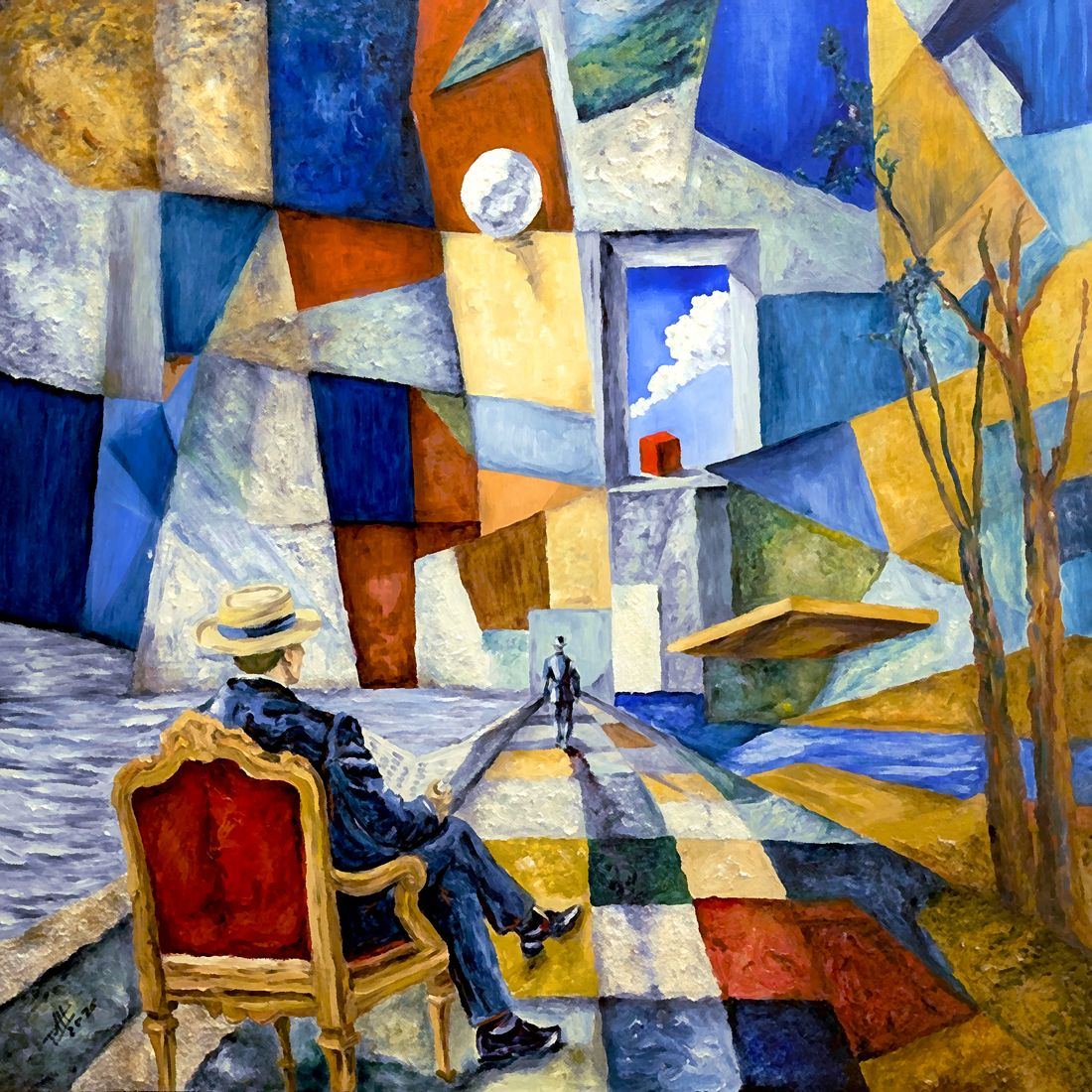
Un hombre sentado en su sillón, dentro de un mundo hecho de planos de color, mira hacia una ventana.A man seated in his armchair, inside a world made of planes of colour, looks towards a window.
Cómo se hizoHow it was made
El cuadro se empezó a finales de junio de 2026 y se terminó un mes después. Las fotos del taller muestran cómo, sobre un fondo previo y un dibujo muy fino, el espacio se va cerrando en planos de color hasta formar un mundo propio alrededor de la figura.
The painting was begun at the end of June 2026 and finished a month later. The studio photographs show how, over an earlier ground and a very fine drawing, space gradually closes into planes of colour until it forms a world of its own around the figure.
-
El fondoThe ground
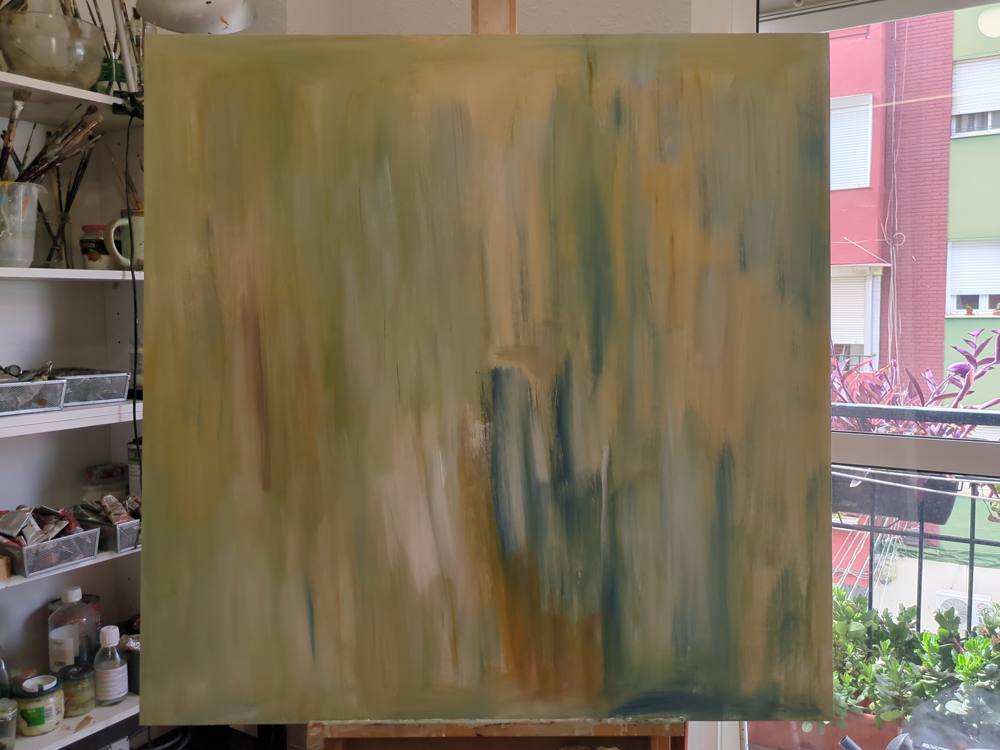
El lienzo se prepara con capas de verdes y ocres que quedarán debajo de todo.
The canvas is prepared with layers of greens and ochres that will remain beneath everything.
22-06-2026 -
El dibujoThe drawing
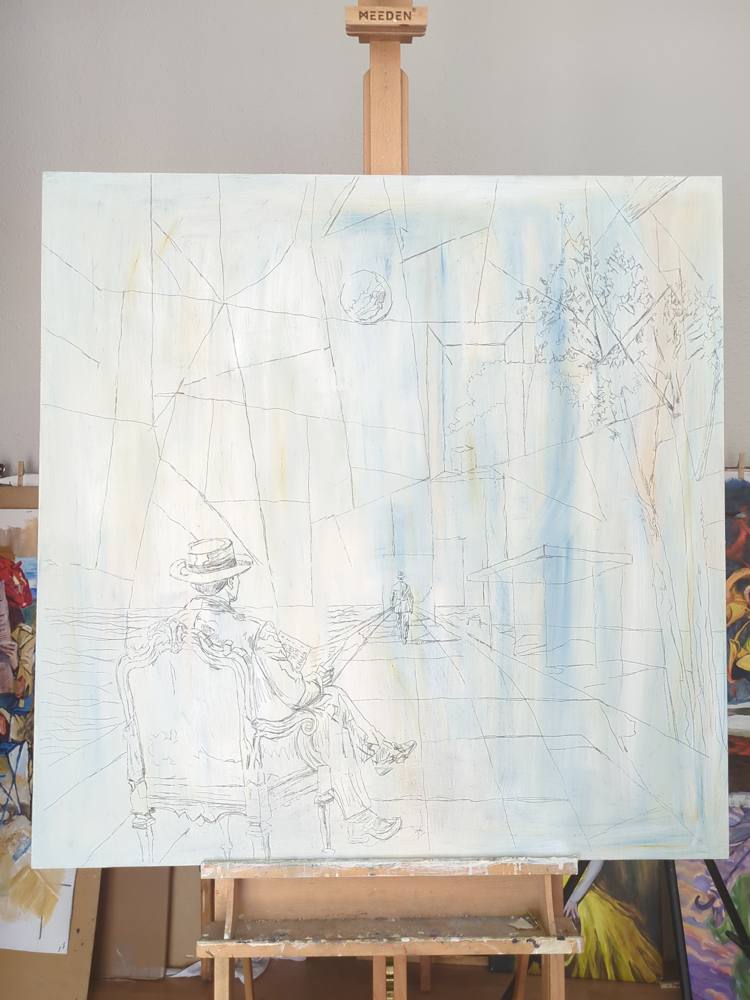
Sobre una base clara se dibuja la escena: el hombre en el sillón, el suelo en perspectiva y la estructura de planos.
Over a light ground the scene is drawn: the man in the armchair, the floor in perspective and the structure of planes.
24-06-2026 -
Los planosThe planes
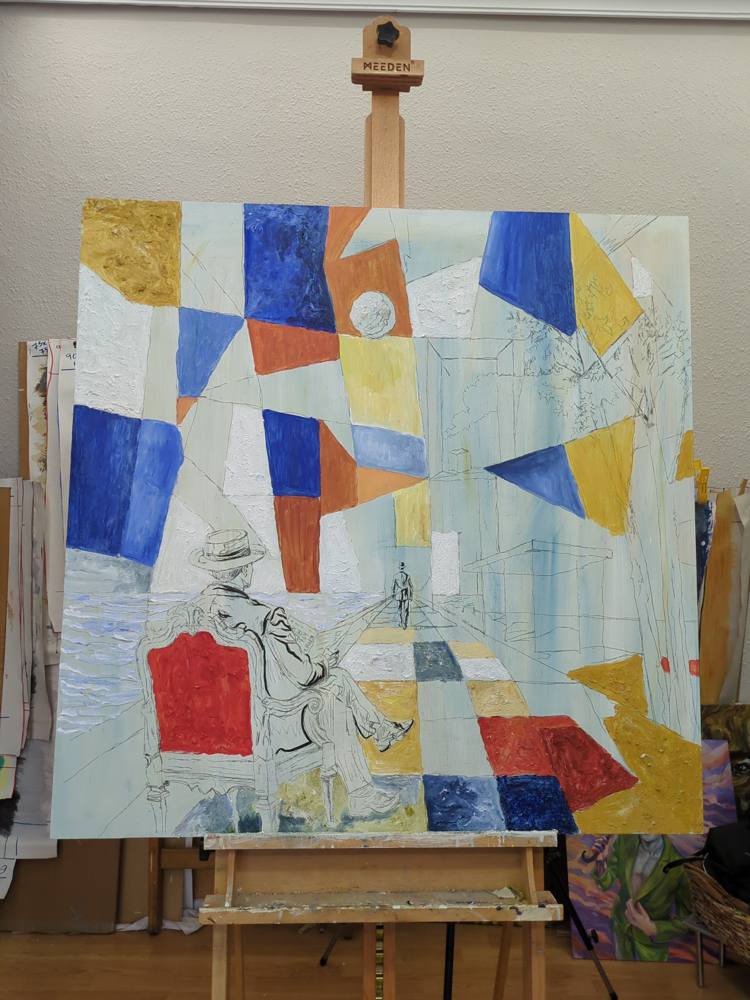
Entran los azules, rojos y amarillos en los planos de arriba. El sillón rojo es lo primero que tiene color abajo.
Blues, reds and yellows come into the upper planes. The red armchair is the first thing with colour below.
12-07-2026 -
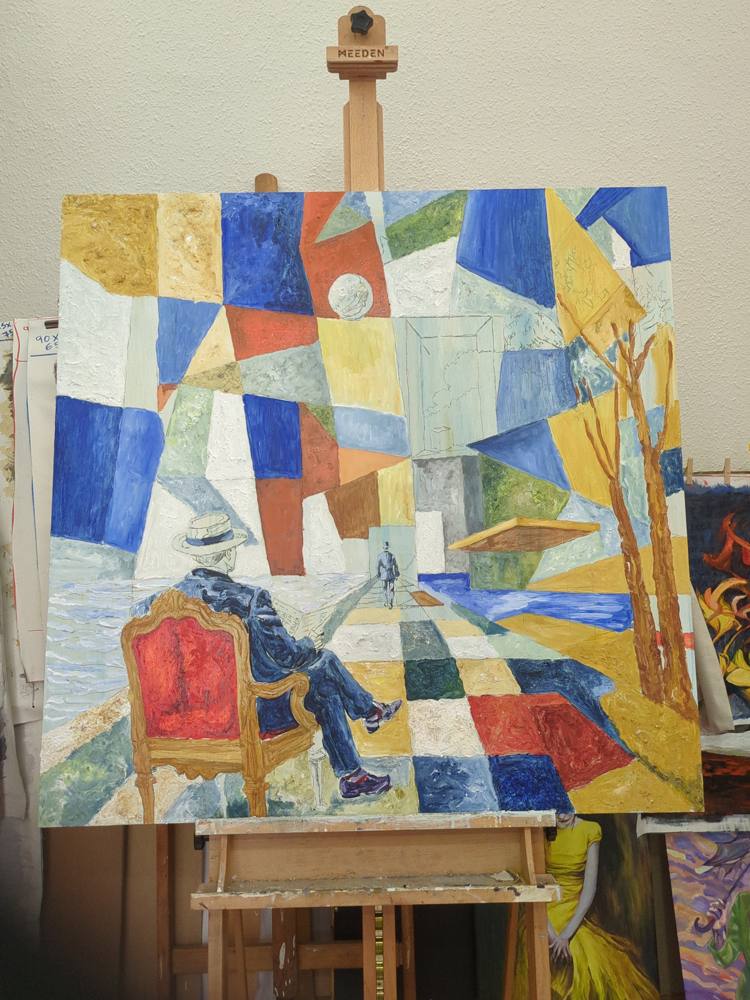
La figuraThe figure
Se pinta el hombre con sombrero de paja y el suelo de cuadros. Aparece el mar a la izquierda.
The man in the straw hat and the chequered floor are painted. The sea appears on the left.
15-07-2026 -
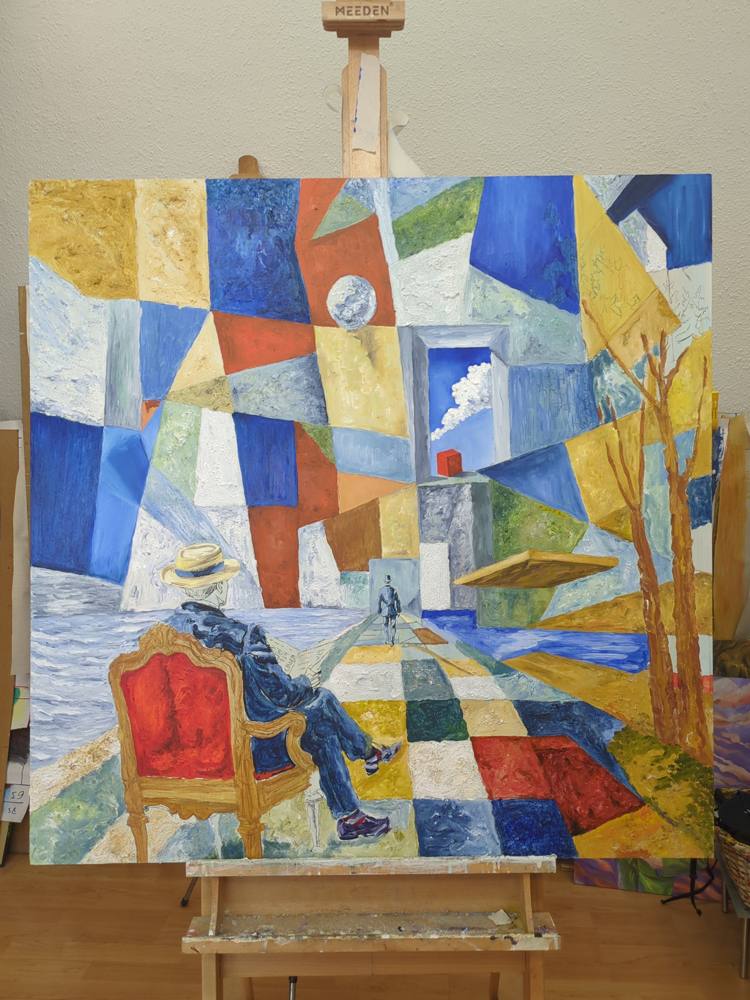
La ventanaThe window
En el centro se abre una ventana con cielo y nubes. Aparecen los árboles de la derecha.
In the centre a window opens onto sky and clouds. The trees on the right appear.
19-07-2026 -
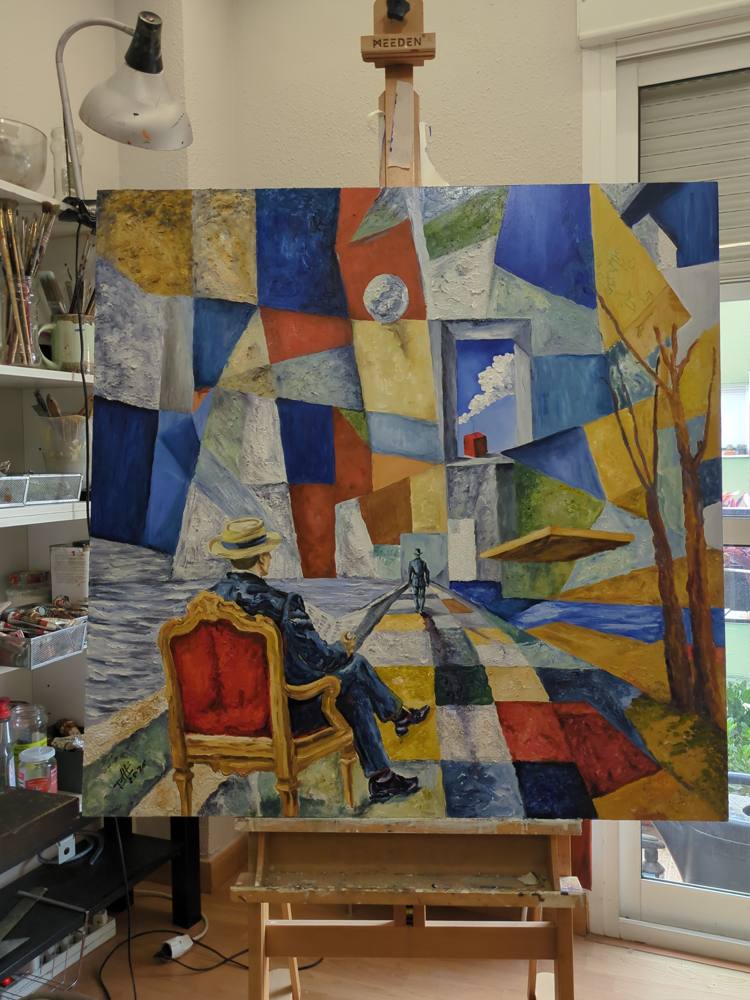
TerminadoFinished
Últimos ajustes: la tabla que flota, la pequeña figura del camino y la firma.
Final adjustments: the floating board, the small figure on the path and the signature.
21-07-2026
Un mundo sin ventanasA world without windows
Para Leibniz, la realidad está hecha de mónadas: sustancias simples, cada una un pequeño mundo que refleja todo el universo desde su punto de vista. Escribió que las mónadas “no tienen ventanas”: nada entra ni sale de ellas.
El cuadro pinta a un hombre en su sillón, encerrado en un espacio hecho de planos de color que solo existe alrededor de él. Pero en el centro hay una ventana, con cielo y nubes, y un camino por el que se aleja una figura pequeña. La obra fue seleccionada y expuesta en el XLVII Premio Gredos de Pintura (Arenas de San Pedro, 2026).
For Leibniz, reality is made of monads: simple substances, each a small world reflecting the whole universe from its own point of view. He wrote that monads “have no windows”: nothing goes in or out of them.
The painting shows a man in his armchair, enclosed in a space made of planes of colour that exists only around him. But at the centre there is a window, with sky and clouds, and a path along which a small figure walks away. The work was selected and exhibited at the 47th Premio Gredos de Pintura (Arenas de San Pedro, 2026).
- Punto de vistaPoint of view
Cada mónada ve el mundo desde su lugar; el cuadro se construye alrededor del que mira.
Each monad sees the world from its own place; the painting is built around the one who looks.
- VentanaWindow
La ventana del centro contradice a Leibniz con ironía: quizá sí hay una salida.
The window at the centre contradicts Leibniz with irony: perhaps there is a way out.
- FragmentosFragments
El espacio está hecho de planos sueltos, como un universo que se recompone.
Space is made of separate planes, like a universe being reassembled.
Cómo está pintadoHow it is painted
ComposiciónComposition
El sillón rojo, abajo a la izquierda, ancla la escena. El suelo en perspectiva lleva la mirada hacia la ventana y la pequeña figura del centro.
The red armchair, at lower left, anchors the scene. The floor in perspective leads the eye towards the window and the small figure at the centre.
ColorColour
Primarios intensos —azul, rojo, amarillo— junto a blancos y grises con textura. El cielo de la ventana es el único azul suave.
Intense primaries —blue, red, yellow— beside textured whites and greys. The sky in the window is the only soft blue.
MateriaMatter
Óleo con empastes marcados en los planos, que crean superficies casi en relieve, y pincelada más fina en la figura.
Oil with pronounced impasto in the planes, creating almost relief-like surfaces, and finer brushwork in the figure.
Recorrido por los detallesA tour of the details
Pulsa un número para ir al detalle. Pulsa cualquier imagen para verla grande.Tap a number to jump to the detail. Tap any image to see it large.
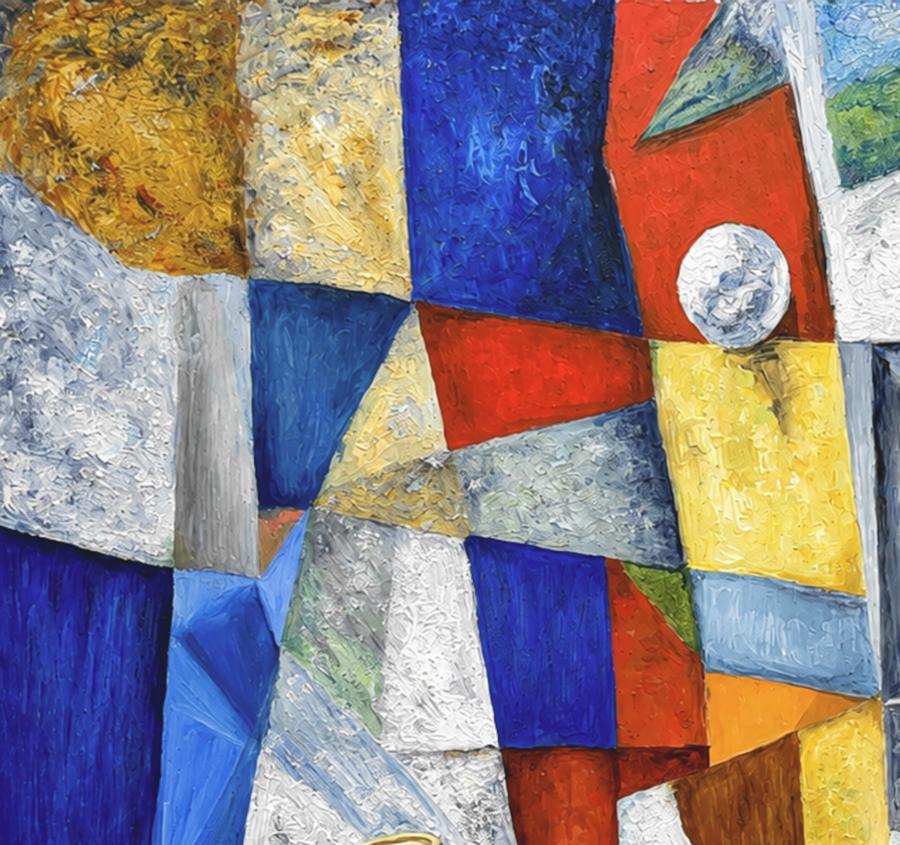
Planos y esferaPlanes and sphere
Arriba a la izquierda, planos de colores puros con una pequeña esfera blanca.
At upper left, planes of pure colour with a small white sphere.
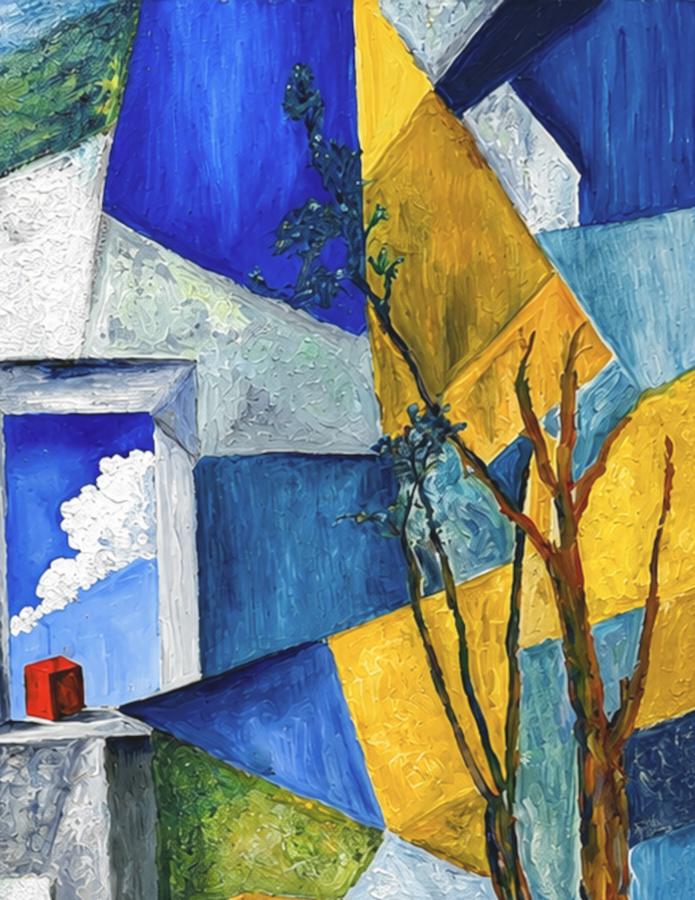
La ventanaThe window
Una ventana abierta al cielo con nubes y una caja roja. La única salida del cuadro.
A window open to a cloudy sky, with a red box. The only way out of the picture.
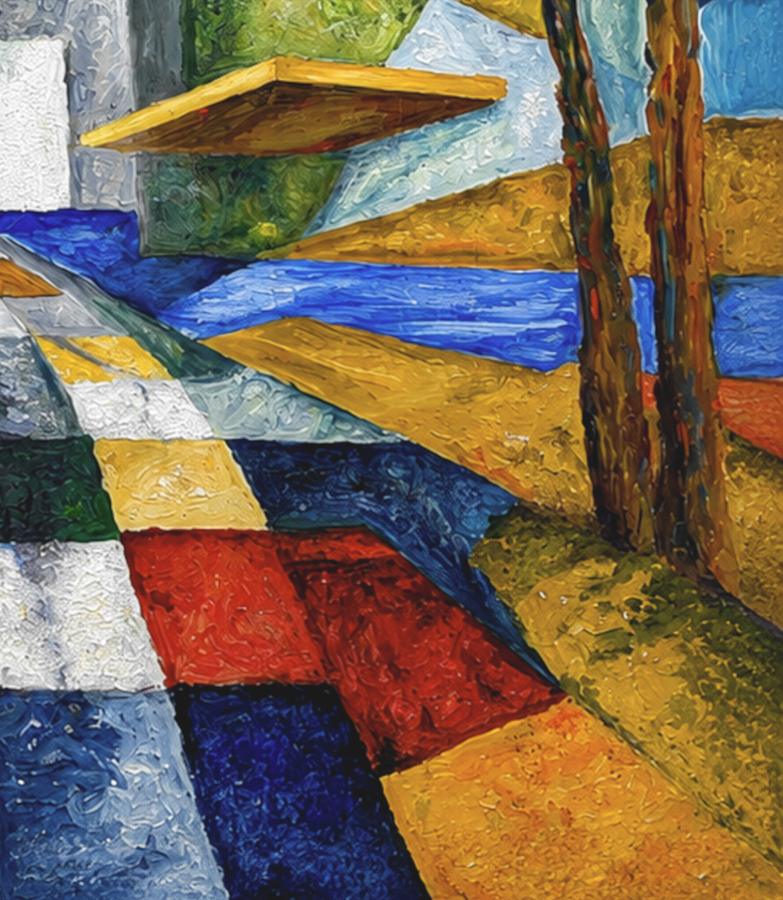
La tabla y los árbolesThe board and the trees
Una tabla que flota en el aire, troncos desnudos y una franja de mar.
A board floating in the air, bare tree trunks and a strip of sea.
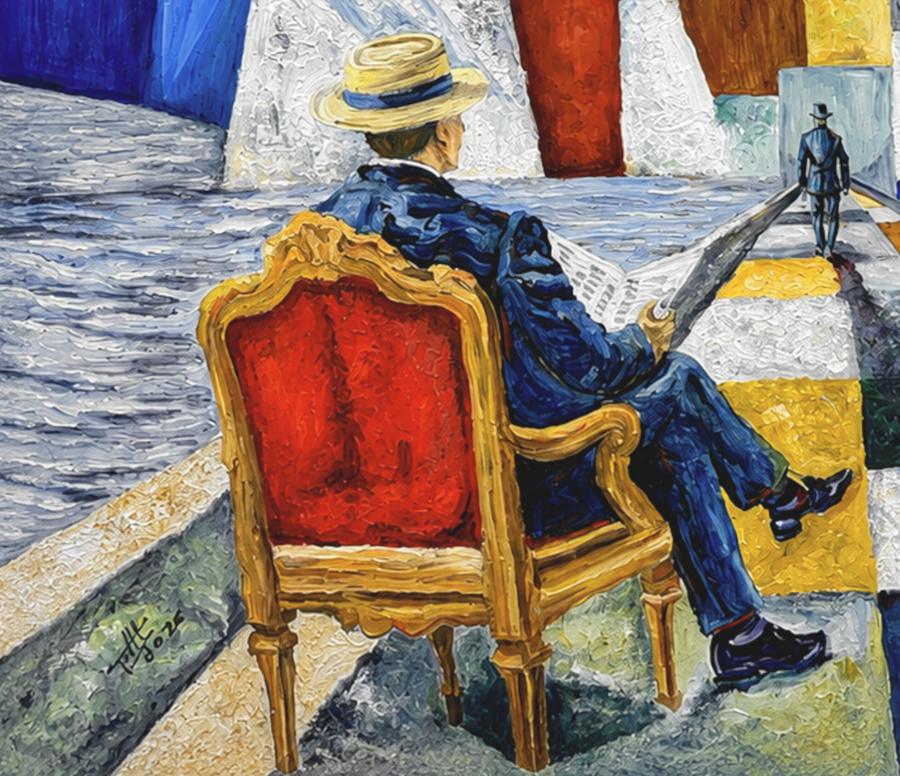
El hombre en el sillónThe man in the armchair
Sombrero de paja, traje azul y sillón rojo dorado. Mira hacia el fondo, de espaldas a nosotros.
Straw hat, blue suit and red-and-gold armchair. He looks into the distance, with his back to us.
El proceso, en vídeoThe process, on video
Un recorrido breve por las fotos del taller, de la primera capa al cuadro terminado.
A short tour through the studio photographs, from the first layer to the finished painting.